


Cliousclat - potters village
 |  |  |
|---|---|---|
 |  |  |
 |  |
Glaze properties
Glazing traditions
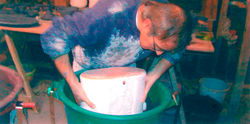
Glazing gives two main qualities to the pottery: water-proofing and shine. The potter dips a pot into a container of glaze or uses a dipper. Next, using dipping tongs, the pot is totally submerged in glaze, lifted out and set aside until it is dry. Then it will be fired in the kiln.
The traditional pottery glaze used in Cliousclat is composed of a substance called “alquifoux” (lead sulfate grinded in a stone mill). This composition melts during pottery firing and forms a shiny silicate on the surface.
The glaze came from Spain and, in the 1920’s, was ground in Poet-Laval; in the 40’s – in Cliousclat. Glazing is expensive so several types of pottery were varnished only inside, where the pottery surface is in direct contact with contents. This method was also used for drinking bowls for rabbits, chickens, etc.
Glaze forms a transparent and glossy surface on the pottery. But a mixture of glaze and the colorants can also color the pieces. If a pot is designed to be one-colored, pigments are mixed directly in the varnish. A multicolored decorated piece is engobed, decorated, then covered with a transparent glaze.